Why regular on-site inspections matter
Smart cameras and smart thermostats have created an understandable sense of remote reassurance. You can check a room temperature on an app from London or Zurich and assume everything is serene at your house in the Algarve. But connected sensors are fundamentally blind to slow leaks inside drywalls, rising damp behind skirtings, insect ingress through terrace weep holes, or warped window seals that let autumn drizzle seep onto parquet flooring.
Physical inspections bridge the gap between digital telemetry and real-world durability. When a local caretaker or property manager conducts a scheduled walkthrough, they don't just glance around; they use physical senses to detect subtle musty odors, hear humming water pumps cycling unexpectedly, and spot hairline fractures after ground shifts.
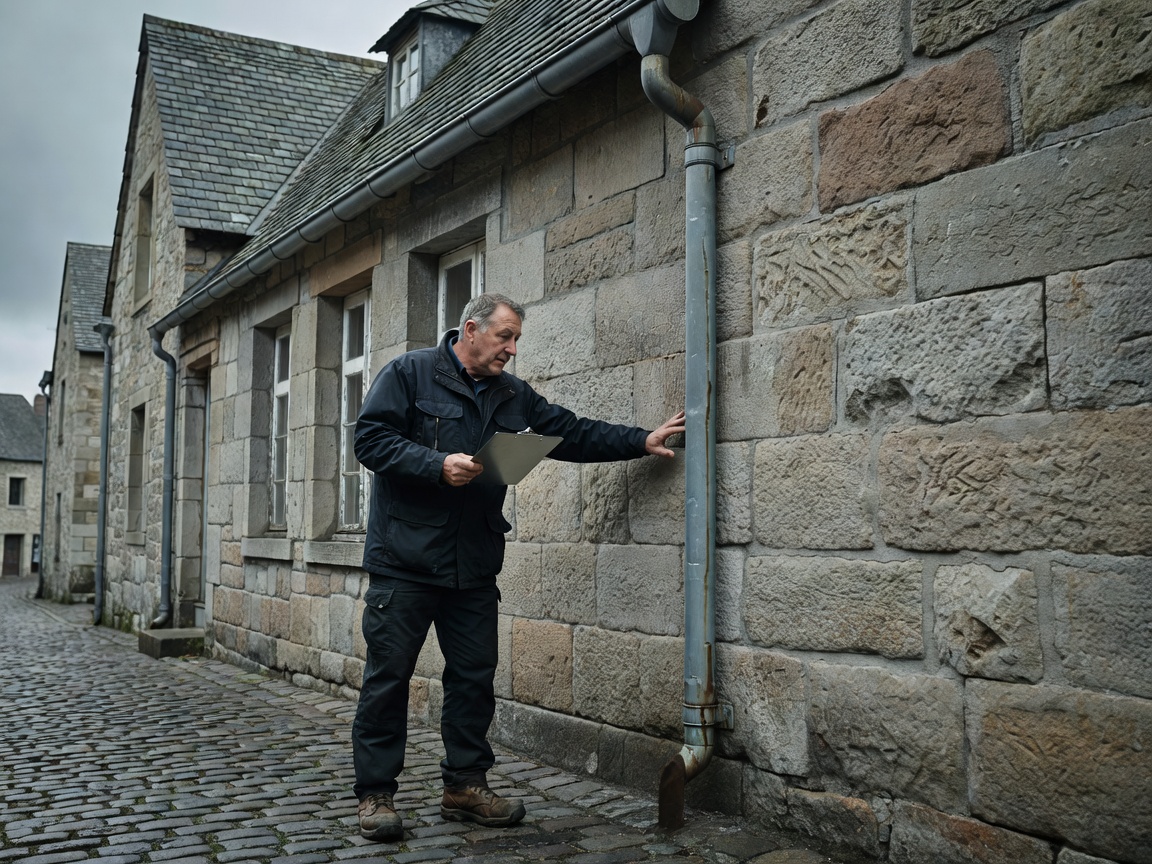
Core components of a comprehensive inspection
An inspection should never be a quick five-minute wander. To be worth anything, it needs to follow a rigorous, step-by-step route from the perimeter boundary inwards.
1. Exterior envelope and drainage
The exterior examination begins at the property boundaries. Are access gates and fences structurally secure? Have overgrown brambles or eucalyptus branches made contact with rooflines or overhead power feeds? From ground level, check the roof profile through binoculars: are there displaced terra cotta tiles, loose ridge caps, or tell-tale sagging?
Downspouts and gutter hoppers demand special attention, particularly before autumn downpours. A single handful of pine needles in a hidden valley gutter can cause liters of rainwater to overflow into soffit boards, finding its way directly into upper bedrooms.
2. Interior envelope, joinery, and glazing
Inside, the inspection starts from the top down. Ceiling corners beneath roof valleys or chimneys must be examined for shadow rings or faint discoloration. Timber window frames throughout southern Europe frequently dry out and shrink during sweltering summers, creating micro-gaps that allow winter driving rain to bypass the rebate.
Every exterior door and window should be unlatched, swung open, checked for smooth closure, and relocked. Hinges, espagnolette bolts, and roller shutters (volets roulants / persianas) must be run through their full travel to prevent seizing.
3. Domestic plumbing and sanitary checks
Plumbing issues represent the single greatest financial liability for vacant residences. During a walkthrough, every tap should be briefly opened to refresh stagnant water in pipe dead-legs and re-seal the liquid barrier in siphon traps. When showers or guest sinks sit dry for months, sewer vermin and noxious gases migrate indoors, while elastomeric seals on toilet flushes dry out, crack, and trigger continuous silent cistern leaks.
Check the main water meter while all fixtures are off. If the low-flow dial or digital meter increments even marginally over twenty minutes, you have an underground line fracture or hidden cistern bypass.
4. Heating, ventilation, and electrical cues
Walk past the main distribution board. Is there any faint acrid smell or tripped residual current device (RCD/GFCI)? Verify that heating circuits intended for frost protection are functioning at the desired baseline (typically 8–10°C) without registering pressure drops on boiler barometers.
Checklist: Priority inspection points
- Water meter check: Record the read upon arrival and departure to confirm zero flow when idle.
- Trap rehydration: Run 500ml of fresh water through every guest sink, bidet, and utility drain.
- Sub-floor vents: Ensure rodent grilles and air bricks are clear of fallen leaves and dirt.
- Appliance seals: Verify refrigerator doors are either propped open or operating smoothly without frost buildup.
- Attic and crawlspaces: Quick visual check for bat roosts, rodent tracks, or daylight entering roof junctions.
Determining the right inspection frequency
How often should someone walk through your property? There isn't a single universal answer; frequency depends heavily on geographic climate, property construction, and insurance clauses.
Many European home insurance underwriters explicitly mandate that properties unoccupied for more than 30 or 60 consecutive days must be physically visited every 14 to 28 days to keep leak and burglary coverage fully enforceable. During stormy winter months in coastal Brittany, Atlantic Portugal, or western Scotland, a bi-weekly cadence is sensible. For an inland stone cottage during a calm spring, monthly checks are often sufficient.
What a useful inspection report looks like
An inspection without an organized written report creates little actionable value. A good report does not overwhelm the owner with seventy unannotated photos of pristine walls. Instead, it provides:
- Timestamped arrival and departure logs.
- Baseline utility meter readings (water, electricity, gas/oil tank levels).
- Ambient temperature and relative humidity recordings.
- Direct side-by-side comparisons of any deteriorating condition spotted on previous visits.
- Categorized observations distinguishing urgent hazards (e.g. actively dripping stopcock) from advisory items (e.g. garden gate hinge beginning to squeak).
The limitations of scheduled inspections
It is equally vital to understand what routine walkthroughs cannot do. An inspector is not conducting a destructive invasive survey; they cannot see behind solid masonry walls or inside buried conduit. A scheduled inspection is a diagnostic snapshot in time, not an absolute guarantee against unexpected flash floods or catastrophic sudden component failure between visits. However, it remains the single most reliable deterrent against compounding structural decay.